
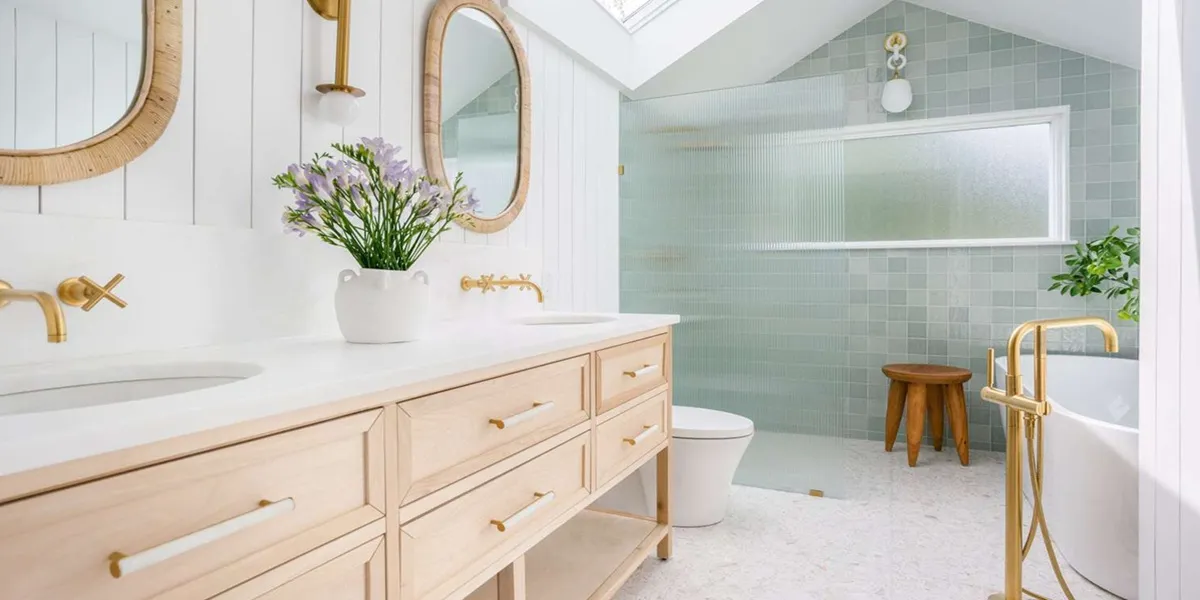
Designing small bathrooms is a key interior design challenge that can be transformed into a bright and modern space using smart, scientific strategies. According to research published in the International Journal of Interior Design, proper use of lighting, reflective materials, and minimalist layouts can make a bathroom feel up to 35% larger. Other studies from the University of Copenhagen show that light colors and glossy tiles can increase light reflection and the sense of openness by up to 25%.
Additionally, selecting Victoria Albert fixtures, known for their luxurious and modern designs, enhances visual appeal and a sense of spaciousness. Evimetal sanitaryware, made from rust-resistant and moisture-proof materials, improves durability and functionality in small bathrooms. Meanwhile, AEON fixtures, with their space-optimized modern designs, provide ideal solutions for maximizing small bathroom layouts.
This article presents 66 practical and research-backed strategies to transform even the smallest bathrooms into attractive and functional spaces. Discover the latest scientific methods for designing small bathrooms!
1. Large Mirrors: A Trick to Visually Expand Space
One of the most effective strategies for small bathroom design is using large mirrors. Harvard research shows that floor-to-ceiling or wall mirrors can create up to 25% more perceived space by reflecting light. The best option is a large frameless mirror above the sink or a full-wall mirror to create a sense of depth. LED backlit mirrors not only optimize lighting but also emphasize vertical spaces.
2. Glossy and Light-Colored Tiles: Reflecting Light to Enlarge the Bathroom
Glossy, light-colored tiles are a scientifically proven method to enhance the sense of space in small bathrooms. MIT research indicates that glazed ceramic tiles reflect up to 30% more light than matte tiles. White, cream, and light blue colors work best. Horizontal rectangular tiles make walls appear wider, giving the bathroom a larger feel.
3. Sliding Glass Doors Instead of Shower Curtains
Shower curtains often make a bathroom feel smaller by blocking sightlines and disrupting visual flow. Research from the University of Toronto shows that using sliding glass doors can increase the perceived bathroom space by up to 25%. The best choices are clear or frosted moisture-resistant glass. Frameless or minimal-frame doors improve light flow and make the bathroom appear more open.
4. Wall-Mounted Sinks: Eliminating Bases to Create More Space
Wall-mounted sinks are one of the most practical ideas for small bathroom design. Research published in Interior Architecture shows that removing sink bases can free up to 20% of floor space, creating a lighter and more open feel. Minimalist models with built-in drawers or floating sinks with empty space underneath are excellent choices for small bathrooms.
5. Recessed Wall Cabinets: Optimizing Dead Space
Using empty wall spaces is a smart strategy for small bathrooms. According to Home & Design magazine, recessed wall cabinets can provide up to 15% more storage without occupying useful floor space. Cabinets with mirrored doors are ideal as they reflect light and enhance the sense of space.
6. Ceiling-Mounted Showers: Using Height Efficiently
Ceiling-mounted showers are ideal for small bathrooms because they free wall space and reduce visual clutter. MIT studies show that ceiling showers can improve space efficiency and reduce visual congestion by up to 30%. Slim, modern designs with wide water outlets simulate natural rainfall. Water-saving technology in these showers can reduce water use by up to 40%. Combining a ceiling shower with seamless flooring, frameless glass, and linear drainage enhances the perception of a larger bathroom.
7. Narrow Wall Shelves: Optimal Storage for Small Spaces
Research from the University of Toronto indicates that narrow wall shelves can create up to 20% more usable storage. In small bathrooms, placing items on the sink surface adds visual clutter and reduces usable space. Shallow shelves (about 10–15 cm) installed beside sinks or showers can store toiletries, towels, and cleaning products. Stainless steel or glass shelves with minimalist frames enhance both functionality and aesthetics. Floating or recessed shelves are excellent for saving space.
8. Uniform and Minimal Colors: Reducing Visual Clutter
The University of Copenhagen shows that using uniform, light colors in small bathrooms can create up to 35% more perceived space. Dark colors make the room feel smaller and busier. White, cream, light gray, and pale blue, combined with reflective materials, create the illusion of a more open space. Using consistent colors for tiles, walls, and ceilings ensures visual continuity. Pairing a minimalist base color with matte and glossy materials balances the visual effect. Light-colored tiles with thinner grout lines also help make the bathroom appear larger.
9. Framed Mirrors with Hidden Lighting: Adding Depth
According to Architectural Digest, mirrors with hidden lighting can increase perceived space by up to 40%. In small bathrooms, mirrors are a key tool for creating depth. Full-length or large wall mirrors with LED backlighting enhance brightness and visual depth. Hidden lighting can be installed as LED strips around the mirror or recessed lights above and below it. Smart mirrors with adjustable warm and cool light settings are also recommended.
10. Continuous Light-Colored Flooring: Creating Visual Continuity
Stanford University research shows that continuous flooring can increase perceived space by up to 30%. Floors with many lines or patterns create visual clutter and divide the space. Materials like epoxy resin, large tiles, or uniform ceramics are ideal for small bathrooms. Light colors such as white, gray, and beige, in matte or semi-gloss finishes, reflect light and make the space appear larger. Coordinating the floor with the walls prevents visual segmentation and enhances spatial continuity.
11. Waterproof Wood for Adding Warmth to Small Spaces
Wood, as a natural element, can create a sense of warmth and luxury in small bathroom design. Research from the University of Helsinki shows that waterproof woods such as thermowood, teak, and bamboo not only resist moisture but can also improve air quality and humidity control by up to 20%. Using these materials for flooring, wall shelves, shower benches, or behind sinks is ideal for adding warmth. Pairing wood with minimal colors and light tiles creates visual contrast and a modern, stylish look.
12. Corner Shelves for Utilizing Unused Space
Studies from the University of Oxford indicate that bathroom corners often make up 15–20% of usable space but remain unused in many designs. Corner shelves are an excellent solution for increasing storage capacity. Floating, glass, or stainless-steel shelves are ideal for essentials like shampoo, towels, and toiletries. Built-in corner shelves also enhance storage without taking up extra surface area.
13. Placing the Washing Machine Under the Sink
According to Home & Living magazine, placing a washing machine under the sink can save up to 25% of space. Many new washer models are slim and shallow, designed specifically for small areas. Using waterproof cabinets with proper ventilation prevents moisture issues. This setup increases usable bathroom space without compromising functionality.
14. Small Japanese Tubs: Luxury in Compact Spaces
Japanese tubs, with their deep and compact design, are ideal for small bathrooms. Kyoto University studies show these tubs can reduce space usage by up to 50% compared to standard tubs. Their taller design allows full immersion while occupying less floor space. Materials like acrylic and enameled cast iron retain heat longer, providing a luxurious bathing experience.
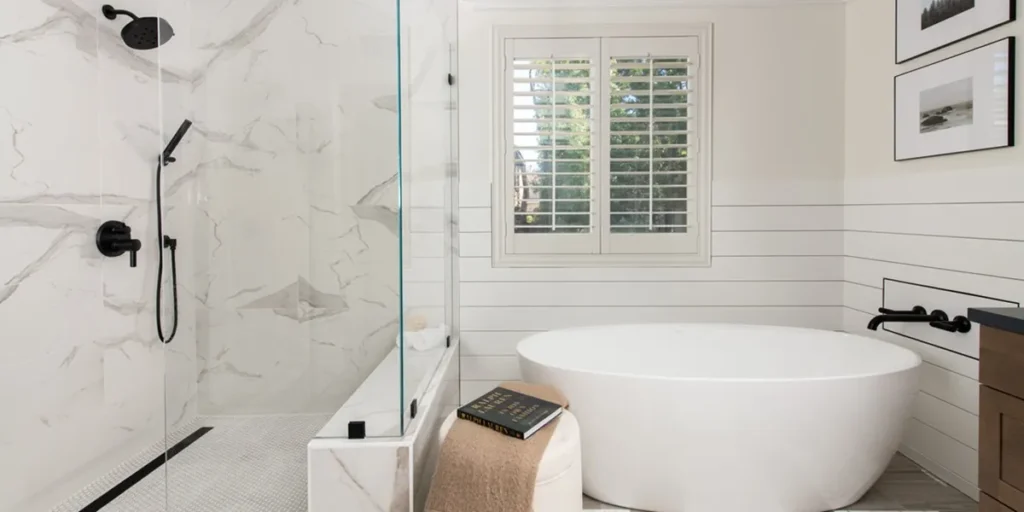
15. Corner Sinks: Optimal Choice for Small Bathrooms
Research from UCLA shows corner sinks can free up to 30% more space in small bathrooms. These slim, wall-mounted sinks are practical for limited spaces. Wall-mounted faucets instead of countertop models also create more usable surface area.
16. Large Horizontal Tiles: Visual Trick to Make Space Appear Bigger
Harvard University studies indicate that large horizontal tiles can create up to 30% more perceived space in small bathrooms. Rectangular tiles create continuous horizontal lines, guiding the eye along the wall and making the room feel wider. Light colors and minimal grout lines enhance this effect. Large tiles (at least 30×60 cm) and semi-gloss or glazed finishes reflect light and create an open feel. For low ceilings, vertical tile placement can make the space appear taller.
17. Combining Transparent and Matte Materials for Depth
Stanford University research shows that combining transparent and matte materials can increase perceived depth by up to 25%. Clear glass for shower doors or cabinets allows natural and artificial light to flow freely, making the room appear larger. Matte materials like semi-gloss tiles or stone surfaces provide visual contrast, enhancing depth. Frameless glass panels and semi-gloss tiles maximize this effect while creating a modern look and optimizing space.
18. Semi-Transparent Shower Curtains Instead of Dark Colors
Architectural Digest reports that semi-transparent shower curtains can increase brightness and perceived space by up to 20%. Dark, thick curtains block light and make the bathroom feel smaller. Semi-matte or minimalist translucent designs allow light to disperse throughout the room. Moisture-resistant curtains with simple vertical lines or subtle patterns help maintain a fresh, cohesive look.
19. Wall-Mounted Faucets to Save Counter Space
The University of Toronto shows that wall-mounted faucets can free up to 15% of sink surface area. In small bathrooms, every centimeter counts, and removing bulky countertop fixtures creates a more minimalist design. Built-in faucets, especially digital or touch models, provide precise water control without occupying space. Matte black or gold faucets add a modern, stylish touch.
20. Pull-Out Shelves Behind Mirrors: Invisible Storage
Research from the University of Copenhagen shows that mirrors with hidden shelves can provide up to 40% more storage in small bathrooms. Daily items like toothbrushes, creams, and medicines often clutter the countertop. Pull-out shelves behind mirrors create storage while keeping the space organized. These mirrors come in built-in or semi-built-in designs and can be installed at any desired height.
21. Painting the Ceiling with Light Colors to Increase Perceived Height
Studies from UCLA show that painting the ceiling with light colors can increase the perceived height of small bathrooms by up to 15%. Dark colors create a sense of compression, while matte white, light cream, or pale blue reflect light and make the ceiling appear taller. Adding a narrow white strip at the top of the walls can further blur the boundary between ceiling and walls, enhancing the visual height.
22. LED Strip Lighting Around the Ceiling to Make the Space Appear Larger
Research from Stanford University indicates that indirect lighting can increase visual perception of space by up to 25%. Installing LED strips around the ceiling eliminates extra shadows and makes small bathrooms feel more open and modern. RGB or dimmable models allow users to create either a warm or cool atmosphere based on preference.
23. Slim and Shallow Sinks to Save Space
According to Home & Design, slim and shallow sinks can provide up to 20% more usable space in small bathrooms. Wall-mounted or narrow-edged sinks are ideal for compact bathrooms and narrow corridors. Materials like glossy ceramic or solid surface (Corian) ensure durability and easy cleaning.
24. Replacing Unnecessary Walls with Glass
Studies from Oxford University show that removing unnecessary walls can improve spatial perception by up to 35%. Many small bathrooms have partitions that visually break up the space. Replacing these with frameless or semi-frosted glass panels allows natural and artificial light to flow freely, creating a modern, minimalist, and more open environment.
25. Walk-in Shower for a Seamless and Open Feel
Research from MIT shows that using a walk-in shower can increase the perceived space by up to 45%. This design makes the bathroom floor appear continuous and borderless, enhancing openness. Models with anti-slip flooring and linear drains are highly practical for safety and functionality. Frameless glass panels combined with wall-mounted or ceiling showers complete this modern, minimalistic look.
26. Neutral and Soft Colors for Calmness and Spaciousness
Harvard University research indicates that neutral “nude” colors can enhance a sense of calm and reduce visual clutter by up to 30%. Dark or overly glossy colors in small bathrooms create visual pressure and make the space feel cramped. Ideal choices include beige, light cream, soft gray, off-white, and very pale pink. Using matte tiles in matching wall colors adds visual cohesion, while combining these tones with natural wood or gold and silver metal accents creates a modern and warm atmosphere.
27. Multi-functional Fixtures: Vanity with Hidden Storage
Stanford University studies show that vanities with hidden drawers or built-in compartments can optimize bathroom space by up to 40%. Vanities with concealed storage under the sink allow for organizing towels, cleaning supplies, and toiletries. Shallow wall cabinets above the sink further help maintain tidiness. Some modern models feature dual-purpose mirrors with hidden storage behind them. Wall-mounted and floating designs free up floor space and make the bathroom feel larger.
28. Minimalist and Slim Faucets to Reduce Visual Clutter
Research from the University of Toronto shows that slim, minimalist faucets can reduce visual clutter and enhance bathroom aesthetics by up to 15%. Large, bulky faucets make the sink area feel cramped. Linear designs in matte black, soft gold, or polished chrome add a modern, lightweight touch. Wall-mounted models free up sink surfaces and simplify cleaning. Touch or digital faucets also improve hygiene while reducing water consumption.
29. Vertical Shelves Behind Doors to Utilize Unused Space
According to Home & Living, the area behind bathroom doors can account for up to 20% of unused space. Installing shallow vertical shelves in this zone provides storage for towels, cleaning supplies, and toiletries. Moisture-resistant wood or stainless steel are ideal materials. To avoid clutter, baskets with handles or door-covered shelves can be used. This is especially practical in bathrooms with limited shelving options.
30. Concealing Toiletries in Shallow Built-in Drawers
Oxford University research shows that shallow built-in drawers can improve organization and reduce clutter by up to 25%. Items like razors, toothpaste, and combs often occupy sink surfaces, creating visual mess. Installing shallow drawers in side walls or inside wall cabinets optimizes space and organizes essentials neatly. Some modern models feature soft-close sliding rails for easy, silent access.
31. Smart Frosted Glass for Privacy Without Taking Up Space
MIT research shows that smart frosted glass can increase natural light and maintain privacy in bathrooms by up to 30%. These glasses switch from transparent to frosted with a touch button or thermal sensor. This technology eliminates the need for heavy curtains or bulky wooden doors, making the bathroom feel more open. Frosted smart glass can be used in shower doors, windows, or partition walls, offering a modern solution for small bathrooms.
32. Waterproof Venetian Blinds Instead of Heavy Fabric Curtains
Copenhagen University studies indicate that waterproof blinds can reduce humidity and improve air circulation in bathrooms by up to 20%. Regular fabric curtains get easily wet and create a breeding ground for mold. Waterproof blinds with adjustable slats allow light and ventilation control without occupying extra space. PVC, aluminum, or water-resistant wooden blinds can be chosen depending on the bathroom style.
33. Built-in Toilet Paper Holders to Minimize Space Usage
According to Architectural Digest, recessed toilet paper holders can increase usable bathroom space by up to 10%. In small bathrooms, standard holders mounted on walls or next to the toilet can limit space. Built-in models installed inside the wall provide easy access and a minimalist design without taking up floor or wall space.
34. Slatted Shelves for Better Airflow and Moisture Prevention
Stanford University research shows that slatted shelves can reduce mold and mildew growth due to humidity by up to 20%. Typically made from water-resistant wood or stainless steel, these shelves allow air to flow freely, preventing steam and moisture buildup. Floating wall-mounted or ceiling-hanging slatted shelves can help optimize storage and maintain a fresh environment in small bathrooms.
35. Using Small, Minimalist Tiles for Visual Harmony
Toronto University studies show that using small tiles on bathroom walls can improve visual perception of space by up to 30%. Uniform, light-colored tiles work especially well behind sinks or in shower areas. Neutral shades and simple designs create a cohesive and harmonious look. Glass or metallic tiles reflect light, adding brightness and a subtle glow to the bathroom.
36. Wall-mounted Lighting Instead of Ceiling Fixtures to Save Height
Stanford research indicates that wall-mounted lighting in small bathrooms can increase perceived height by up to 25%. Central ceiling lights concentrate light in one area and create unwanted shadows. Replacing them with wall lights on either side of the mirror or along side walls distributes light more evenly. Low-energy LED lights in warm or natural white prevent shadows and brighten the space. Linear recessed or minimalist wall lights enhance the modern look.
37. Hidden Cabinets Behind Doors for Toiletries and Towels
Toronto University studies show that installing hidden cabinets behind doors can add up to 30% more storage space. Often unused, this area can be optimized with shallow cabinets or concealed shelves for towels, toiletries, and daily essentials. Doors can be mirrored, water-resistant wood, or moisture-proof PVC. Adjustable internal shelves allow customization according to user needs.
38. Foldable Waterproof Curtains to Save Space
Copenhagen University research indicates that foldable waterproof curtains can increase usable space in small bathrooms by up to 20%. Traditional fabric curtains become sticky when wet and take up extra space. Roller or slatted curtains made of PVC or moisture-resistant vinyl can be folded away quickly, freeing up space. Semi-transparent or frosted designs allow light to pass, making the room feel brighter and more open.
39. Two-tone Walls: Light Upper, Dark Lower for Depth
Oxford University studies show that a two-tone wall technique can enhance depth and height perception by up to 15%. Paint the upper half of the walls in light colors like white or beige and the lower half in darker shades such as gray or deep blue. This visual contrast makes the ceiling appear higher and the bathroom larger. Using uniform tiles on the lower section and matte paint above enhances the effect.
40. Herringbone Floor Tiles for Optical Illusion and Larger Perception
MIT research indicates that herringbone or diagonal floor patterns can make the space appear up to 20% larger. This design guides the eye along geometric lines, creating the illusion of a wider area. Tiles measuring 30×60 cm or larger in light colors are ideal. Semi-gloss or matte tiles with subtle veins add a natural touch and enhance the perception of expanded space.
41. Using Shiny Metal Strips to Reflect Light and Enhance Depth
Stanford University studies show that incorporating metallic elements in interior design can increase brightness and perceived depth by up to 25%. Shiny metal strips, typically made of stainless steel, chrome, or brushed aluminum, reflect light and add a sense of luxury and spaciousness. These strips can be applied along walls, around mirrors, or in tile frames to create a modern and striking look.
42. Wall-mounted Shallow Sinks Instead of Bulky Traditional Models
Toronto University research indicates that wall-mounted shallow sinks can free up to 35% more usable space in small bathrooms. Typically 15–25 cm deep, these sinks allow freer movement. Using ceramic, Corian, or stone minimalist designs with wall-mounted faucets not only saves space but also gives the bathroom a sleek, modern appearance.
43. Open Showers to Reduce Visual Boundaries in Small Bathrooms
UCLA studies show that removing shower enclosures and using open showers with linear drains can increase the sense of openness and continuity by up to 40%. Thick glass panels or enclosed shower cabins can make small bathrooms feel cramped. A wall-mounted shower with proper waterproof and anti-slip tiling eliminates barriers and enhances freedom of movement.
44. Converting Small Windows into Vertical Light Wells
MIT research indicates that vertical light wells can increase natural light by up to 30% and reduce energy consumption. Many small bathrooms have limited windows that provide insufficient light. Replacing them with tall vertical openings or frosted glass improves natural light flow and reduces the need for artificial lighting.
45. Hidden Handles in Drawers for a Seamless Minimalist Look
Stanford studies show that hidden handles in bathroom cabinets can reduce visual clutter by up to 15% and enhance aesthetic appeal. These handles often feature recessed grooves or push-to-open mechanisms, giving cabinets a smooth, minimalist appearance. This design style is ideal for small bathrooms that require simplicity and harmony.
46. Installing a Narrow Shelf Above the Sink for Frequently Used Items
Toronto University research shows that adding a narrow shelf above the sink can increase storage for daily essentials by up to 20%. These shelves can be made from waterproof wood, glass, or engineered stone and hold soap, toothbrushes, and creams. Floating installation without additional supports maintains openness and visual appeal.
47. Placing Hidden Hooks and Hangers Behind Doors and Near Showers
Stanford studies indicate that hidden or built-in hooks can reduce visual clutter and increase storage in small bathrooms by up to 20%. Many people store towels and clothing on bulky racks or inside large cabinets. Using space-saving hooks behind doors or on shower walls provides easy access and keeps the space organized. Foldable, magnetic, or retractable built-in hooks are ideal solutions.
48. Installing Movable Showers for Optimized Water Pressure
UCLA research shows that movable showers can reduce water usage by up to 30% compared to fixed models while improving usability. In small bathrooms, fixed wall showers often do not accommodate all users. Handheld showers with flexible hoses make washing easier and aid quick bathroom cleaning. Modern models with adjustable spray settings allow better control of water flow.
49. Cool and Blue Colors for Freshness and Perceived Spaciousness
Copenhagen University studies indicate that cool colors like light blue, mint green, and bluish gray can increase the perception of space in small bathrooms by up to 25%. These tones create a fresh, calming environment. Pairing them with glossy materials such as glass or glazed ceramic tiles adds a modern and luxurious touch. Proper natural and artificial lighting enhances this effect.
50. Using Frosted Full-length Windows for Natural Light Without Sacrificing Privacy
MIT research shows that frosted full-length windows can improve light in small bathrooms and reduce energy usage by up to 35%. Many small bathrooms lack sufficient natural light, making them appear dark and cramped. Frosted or adjustable glass allows light in while maintaining privacy, especially useful for bathrooms facing open spaces or yards.
51. Creating Built-in Niches and Recesses in Shower Walls for Organized Storage
Stanford University research shows that built-in niches in shower walls can increase storage space by up to 25% and eliminate clutter caused by bulky shelves. These niches are usually installed on side or back walls of the shower and provide ideal storage for shampoo, soap, and toiletries. Waterproof tiles or moisture-resistant engineered stone are the best materials for durability and easy cleaning.
52. Integrated Sink and Cabinet Designs for Simplicity and Cohesion
Toronto University studies indicate that sinks integrated with cabinets can improve space utilization and storage efficiency by up to 40%. In small bathrooms, combining the sink with built-in cabinets creates a cleaner, more minimal look around the sink area. These cabinets can feature sliding doors or push-to-open systems, eliminating the need for extra handles. Materials like waterproof MDF, Corian, or engineered stone are recommended for durability and style.
53. Covering Part of the Wall with Mirrors to Enhance Depth
MIT research shows that installing full-length mirrors on part of a bathroom wall can increase the perception of depth and space by up to 45%. Mirrors reflect light and create the illusion of a larger environment. Ideal placements are above the sink or on a side shower wall. Anti-fog mirrors or models with integrated heating systems are recommended to prevent condensation.
54. Adding Humidity-Resistant Plants for Natural Ventilation and Freshness
Harvard University studies indicate that moisture-tolerant plants such as Sansevieria, Boston ferns, and bamboo can improve bathroom air quality by up to 30% and reduce excess humidity. These plants absorb chemical vapors from cleaning products and produce more oxygen. Placing them in wall-mounted or hanging planters preserves floor space while enhancing aesthetic and environmental benefits.
55. Shallow Drawer Cabinets for Organizing Toiletries
Home & Living magazine reports that shallow cabinets can free up to 35% of countertop space. Drawer or adjustable-shelf models work best in small bathrooms. These cabinets can be installed in unused areas like under the sink, next to the shower, or above the toilet.
56. Glass Sinks to Reduce Visual Bulk
Stanford studies show that glass sinks can improve brightness and reduce visual clutter in small bathrooms by up to 20%. Their transparency enhances the sense of space, making them a modern alternative to bulky ceramic or stone sinks. Shatterproof and heat-resistant glass is the best choice for durability.
57. Sliding Cabinet Doors to Save Space When Opening
UCLA research indicates that sliding doors can reduce the opening space of cabinets by up to 40%. In small bathrooms, replacing hinged doors with sliding or pocket doors prevents blocking movement and increases usable space. Mirror or frosted glass doors also enhance brightness and make the space appear larger.
58. Using Contrasting Colors to Highlight Specific Areas
Harvard University studies show that contrasting colors can enhance depth perception and visual dimension in small bathrooms by up to 30%. This technique highlights specific areas, making the space appear larger. Pair neutral tones like white, cream, or light gray with a bold or dark accent color—such as navy, olive green, or matte black—on the vanity wall or inside the shower. Limit coverage of contrasting color to 20% to avoid visual clutter.
59. Proper Placement of Wall-mounted Towel Warmers
Stanford research shows that wall-mounted towel warmers can free up to 25% of floor space. Traditional freestanding models occupy significant space, while wall-mounted designs maintain functionality and optimize room layout. Electric models with adjustable temperature are ideal for small bathrooms, drying towels quickly and reducing humidity.
60. Installing LED Strips Inside Cabinets for Easy Access in Dark Spaces
MIT studies indicate that LED strips inside cabinets can improve access and enhance modern appeal by up to 35%. Many bathroom shelves, especially lower ones, lack sufficient light. Low-energy LED strips with motion sensors illuminate the space automatically when cabinet doors open. This solution enhances functionality, aesthetics, and energy efficiency.
61. Installing Storage Cabinets Behind Mirrors for Extra Space
Toronto University research shows that hidden cabinets behind mirrors can provide up to 40% additional storage for toiletries. In many small bathrooms, the sink area becomes cluttered. These built-in, mirrored-door cabinets are ideal for storing toothbrushes, medicines, and personal care products. Handle-free designs with push-to-open systems are recommended for a minimalistic look.
62. Creating Storage Space at the Base of the Shower for Toiletries
Home & Living magazine reports that recessed niches at the lower part of shower walls can increase storage space by up to 25%. In many small bathrooms, shampoos and cleaning products are placed on the floor or bulky shelves, causing disorder. Waterproof, tiled niches at the shower’s base improve organization and provide easy access to essential items.
63. Using Symmetrical Layouts to Enhance Order and Perceived Space
Oxford University studies indicate that symmetrical arrangements can increase the sense of balance and cohesion in a bathroom by up to 30%. Double sinks, balanced lighting, and mirrors or shelves placed symmetrically create a harmonious and orderly feel. This technique is especially effective in small bathrooms that require a neat, uncluttered design.
64. Covering Bathroom Walls with Anti-Fog Glass for Brightness and Elegance
MIT research shows that anti-fog glass can improve lighting and reduce the need for constant cleaning by up to 35%. Commonly used in shower doors, partition walls, or windows, this glass keeps the bathroom looking clear and fresh. Modern models with nano-coatings prevent condensation and water droplets.
65. Choosing Minimal, Handle-Free Hardware to Reduce Visual Clutter
Stanford University studies show that eliminating bulky handles can reduce visual clutter in small bathrooms by up to 20%. Traditional handles can add a sense of congestion, while built-in, push-to-open, or magnetic designs create a cleaner look. Materials such as polished chrome, matte black, or stainless steel complement modern styles.
66. Installing a Narrow Shelf Above the Sink for Everyday Items
Toronto University research indicates that a narrow shelf above the sink can provide up to 25% more useful storage for frequently used items. Typically made of waterproof wood, engineered stone, or tempered glass, these shelves help organize the space. The ideal placement is above the sink and below the mirror, keeping soap, creams, and cosmetics easily accessible.
Designing Small Bathrooms: The Most Practical Ideas for Compact Spaces
Designing small bathrooms requires careful planning, reflective elements, minimalist layouts, and the right choice of materials. Stanford University research shows that using large mirrors, light colors, and proper lighting can increase the perceived space by up to 40%. Additionally, Architectural Digest reports that wall-mounted shelves and fixtures can boost usable space by up to 30%.
Although limited space is challenging, applying scientific strategies and smart design can transform a small bathroom into a comfortable, beautiful, and modern environment. Now that you’re familiar with these ideas, you can choose one of these techniques for your bathroom and enjoy the positive impact it brings!